
Research Capacity Training for Refugee Youth
The Research Capacity for Refugee Youth (RCap4Youth) is a research capacity training program aimed at training a cadre of young people to engage in research focused on addressing health issues faced by vulnerable populations in humanitarian settings. Funded by the Fogarty International Center at the National Institutes of Health, this administrative supplement to the current ICHAD’s ACHIEVE D43 Training Program was awarded to Drs. Nhial Tutlam (ICHAD’s Associate Director for Research), Proscovia Nabunya (ICHAD’s Director) and Mitra Naseh (Faculty Affiliate). The training responds to the lack of trained research workforce to address the myriad of health challenges facing vulnerable populations in humanitarian settings, as well as the lack of research capacity to help identify and develop evidence-based strategies to address them.
The RCap4Youth 10-day intensive training was conducted in Masaka, Uganda. Out of more than 400 applications received, 30 youth from refugee settlements across Uganda and host communities were competitively selected to take part in the training. Eligible applicants included refugee youth, and those from host communities in Uganda, aged 20 to 35 years, who were registered with the United Nations High Commissioner for Refugees (UNHCR). Applicants were required to have completed secondary school education or higher, and demonstrate interest in conducting research among refugee communities.
The training comprised of nine interactive sessions delivered through a combination of lectures and skills-based learning activities. Sessions were conducted by experts from Washington University in St. Louis, Makerere University, Muni University, Uganda National Council for Science and Technology, Uganda Virus Research Institute and Rakai Health Sciences Program.
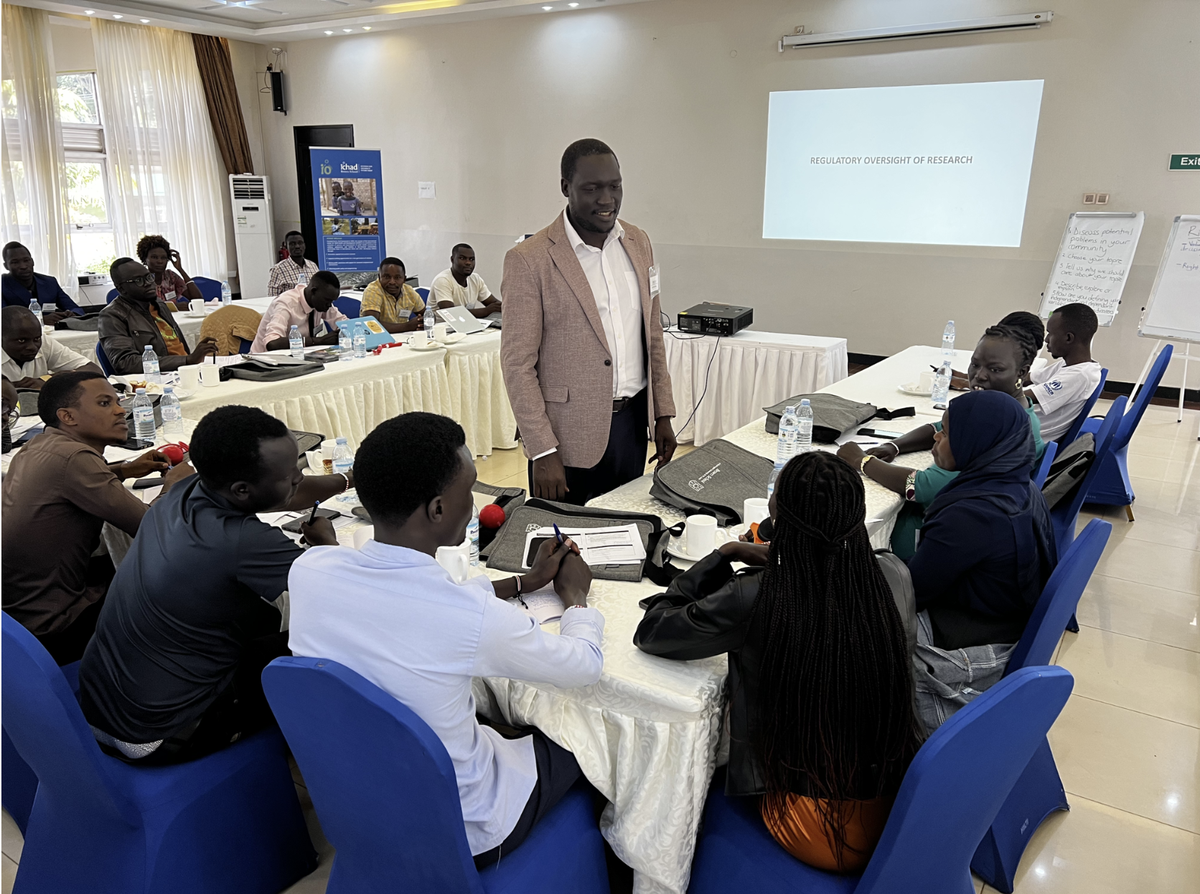
Dr. Ocan (Makerere University) conducting a session on regulatory oversight of research
As part of their research field experiential learning, trainees visited ICHAD’s field research sites and observed intervention delivery in a school setting and health clinics. Trainees also collaborated in groups to identify key challenges within their communities, develop relevant research questions, and design contextually appropriate interventions, which they presented at the end of the training. Some of the topics identified and discussed include: access to higher education among refugee youth; primary school dropout among teenage girls; teenage pregnancies; the impact of food rations on a range of social and health outcomes of refugee youth and households, including school enrollment, academic achievement, adherence to HIV medication, as well as the health of single parent households; and economic empowerment interventions to address teenage pregnancies in refugee settlements. To ensure continued learning, each trainee will be assigned a faculty mentor from one of the partnering institutions to support their ongoing professional development and engagement in research.
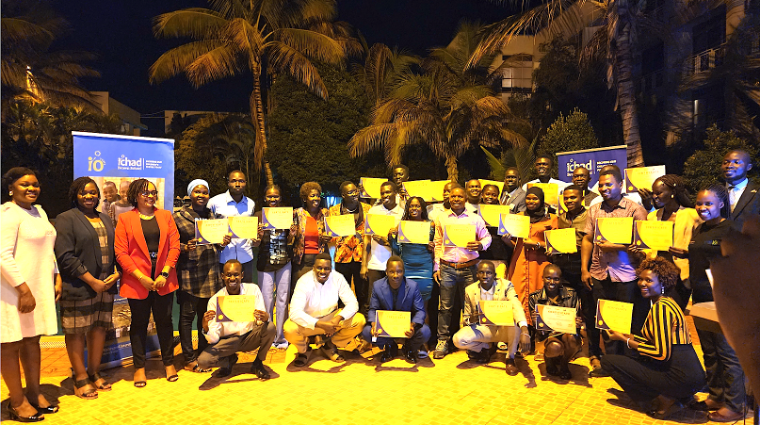
Trainees displaying their certificates at the end of the training
The trainees expressed deep appreciation for the knowledge and skills gained throughout the training. This was evident as they reflected on their experiences, shared memorable moments and highlighted components of the program they found particularly valuable. They also emphasized the importance of the networks formed with program leads, ICHAD staff, and fellow trainees, which they regarded as a key outcome of the training.
“I want to thank ICHAD for giving me the chance to take part in the research training which ended yesterday. It was a great experience that helped me learn important research skills and make social networks with friends. I believe this knowledge will help me in my studies and in the refugee camps in identifying problems and coming up with interventions or solutions to the problems faced by refugees. I am grateful for the support, guidance and everything I learnt in this training. Thank you for helping me grow and believing in my potential.” Manyang